Wedding Seating Chart Etiquette: Who Sits Where
6 min read
A seating chart isn't about hierarchy — it's about giving every guest at least one person they'll be glad to talk to for two hours. The rules below are the distilled version of what planners actually do, plus the honest exceptions: where tradition helps, where it's safe to ignore, and how to handle the genuinely awkward cases like divorced parents and the coworker table.
The head table: three honest options
The classic head table seats the couple with the whole wedding party, facing the room — festive, photogenic, but it splits the wedding party from their own dates. The sweetheart table is just the two of you: you get ten quiet minutes together and can table-hop freely, and your friends keep their partners. The family head table — couple, parents, grandparents — is the warm traditional middle ground, common at smaller weddings.
There is no wrong choice. Pick by one question: who do you want within arm's reach during dinner?
Parents and grandparents
Tradition puts both sets of parents at one parents' table nearest the couple, together with grandparents and the officiant. Two separate family tables — one per side — is just as accepted and often easier, especially when each family has its own language, rhythm or volume. Grandparents appreciate two specific things more than honor: being close enough to see you, and being far enough from the speakers to talk.
Divorced parents, without the drama
The single rule: equal honor, separate tables. Each parent hosts their own table with their partner, siblings or close friends, and both tables stand equally close to the couple — nobody is "demoted" to the back. Don't seat exes together for the sake of a tidy chart, and don't ask them to negotiate it themselves. You decide, you tell them, everyone relaxes.
Plus-ones, singles and the friend tables
Couples and plus-ones always sit together — splitting a date is the one seating move guests still talk about a year later. Seat singles with people who share something real (college, hobby, sense of humor), never at a designated "singles table"; it reads as a setup and everyone knows it. Aim for tables where each guest knows at least two people and can meet two more.
Kids: two workable patterns
Under about seven, children sit with their parents — full stop. From seven or eight up, a kids' table with crayons and a relaxed corner placement is usually the highlight of their evening. Put it where parents can see it, not next to the wedding cake.
Coworkers and the boss
Coworkers come as a group and want to sit as a group — let them. If you've invited your manager, the gracious move is seating them with the most senior or most sociable company, not wedging them between your college friends. One coworker plus partner? Place them with your friendliest, most welcoming table.
The geography of the room
Louder, younger tables go near the band or the dance floor; older guests sit further from the speakers, closer to the exits and restrooms. Guests in wheelchairs get an end-of-table seat on the aisle side, decided in advance rather than improvised. And leave one or two empty seats spread across the room — a late "yes" two days before is close to certain, and an empty chair is cheaper than a redraw.
Make the chart do the remembering
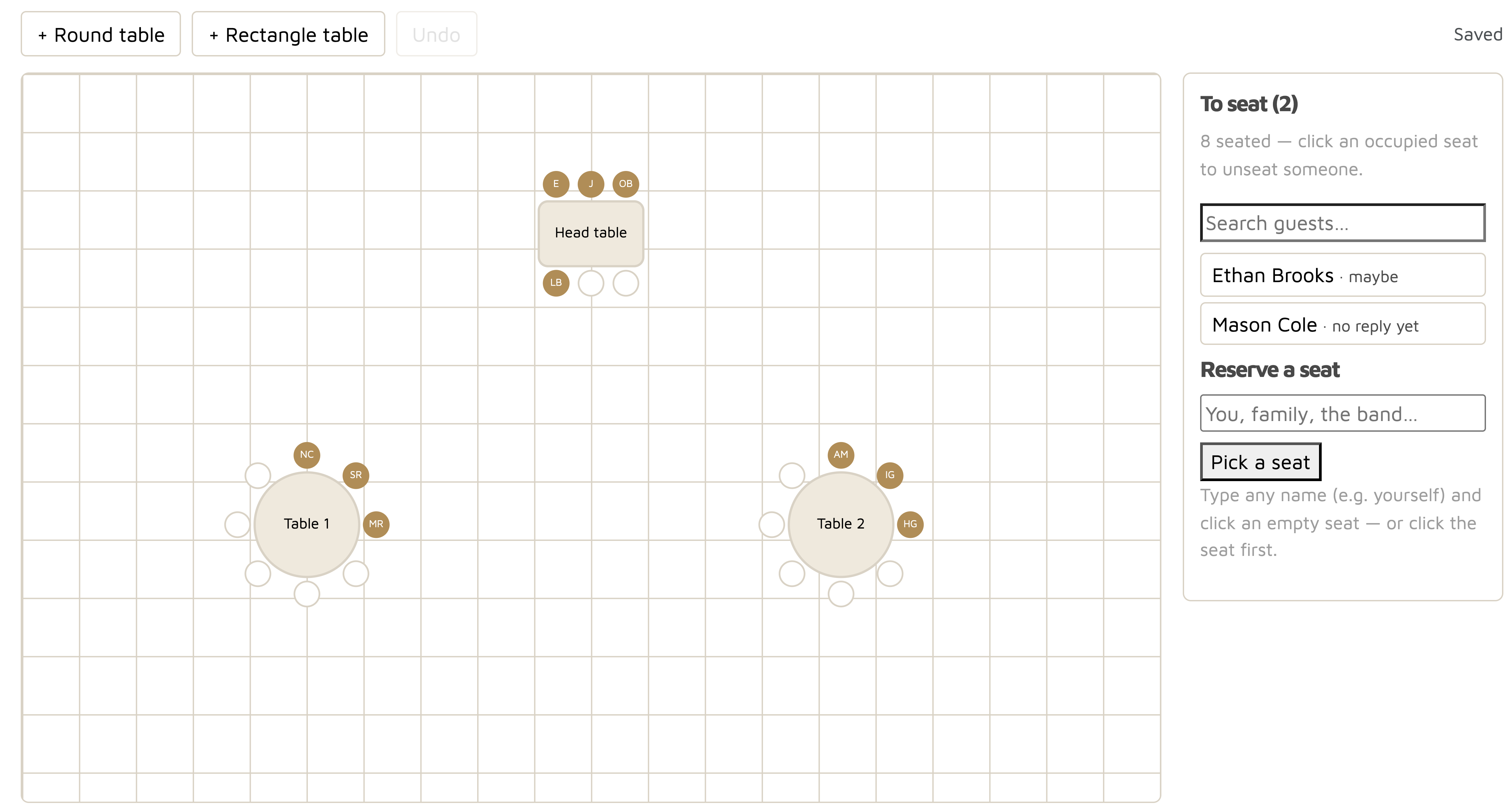
All of the above is easier with a live chart than a spreadsheet. In our free seating chart maker your RSVP list is the source: plus-ones appear under their real names, seated guests leave the to-seat list, and a late reply is a ten-second fix. When the chart settles, it prints the place cards for you — table names included. The full walkthrough is in our seating chart guide.
Frequently asked questions
Do we have to assign seats at a wedding?
For a seated dinner over about 40 guests, yes — open seating leads to split couples, scrambled families and a slow start to dinner. For cocktail-style receptions, assigning tables (not seats) is enough.
Where do parents sit at the reception?
Traditionally both sets of parents share a parents' table closest to the couple, with grandparents and the officiant. Splitting into two family tables — one per side — is equally accepted and often more comfortable.
How do we seat divorced parents?
Give each parent their own table with their partner, family or close friends, both tables equally near the couple. Never make them share a table out of tradition — equal honor, separate tables.
Do plus-ones sit with their date?
Always. Splitting a couple — even a brand-new one — is the one move guests remember. If you know the plus-one's name, put it on the chart and the place card.