When to Send Wedding Invitations: The Complete Timeline
5 min read
Invitation timing is really three deadlines walking in a line: when guests learn the date, when they must answer, and when you need the final headcount. Get those three right and everything else — printing, seating, catering — falls into place. Here is the schedule, counted back from the wedding day.
6–8 months out: save-the-dates
A save-the-date is a calendar claim, not an invitation: date, city, "invitation to follow". Send them six to eight months ahead — earlier (nine to twelve) if guests must book flights or it's a holiday weekend, when prices climb and calendars fill. No save- the-dates? Fine for a short engagement — just move the invitations earlier.
3–4 months out: finish the design and the list
Lock the guest list and get the invitations ready now, so mailing day is a decision, not a scramble. This is also the cheapest moment to catch mistakes — a typo found before printing costs nothing. With our free invitation maker the proof cycle is minutes: pick a style and size (A4 down to A7), write every line your way, add a photo, download the PDF, read it on paper once before the real print run.
6–8 weeks out: invitations go out
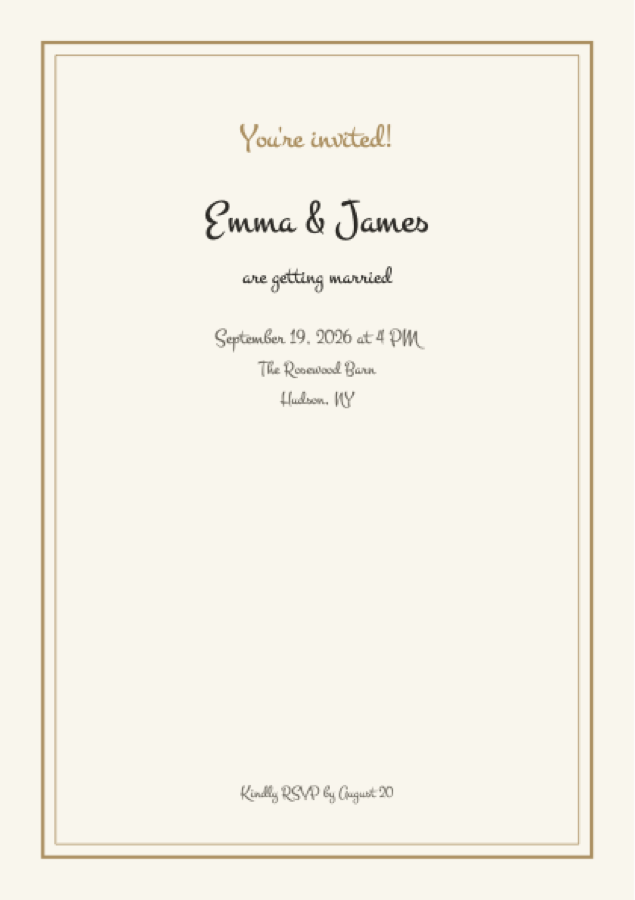
The sweet spot for a local wedding: close enough that nobody files it away and forgets, far enough that calendars are still open. For destination weddings or guests flying in, stretch to ten to twelve weeks. Hand-delivered or mailed, every card should answer four questions without a phone call: where, when, who is invited exactly, and how to reply.
The modern trick for that last one: a QR code on the card that opens your online RSVP page. Guests scan and answer in thirty seconds — name, plus-one, dietary notes — and the reply lands in your guest list by itself. Our invitation maker adds the code automatically when the invitation belongs to an event in the planner.
3–4 weeks out: the RSVP deadline
Work backwards: the caterer wants final numbers about two weeks before the day, and you need a week of buffer for the silent guests and the seating chart. That puts the reply-by date three to four weeks out — print it on the card, set it on the RSVP page, and let the form close itself when it passes.
The chase, automated
Every wedding has them: the 20% who mean to reply and don't. Plan one polite reminder a week before the deadline and a personal message right after it. If you collect RSVPs online, the planner sends that first reminder automatically — and only to the guests who haven't answered, so nobody who said yes gets nagged.
The condensed schedule
- 6–8 months: save-the-dates (9–12 for destination)
- 3–4 months: design finished, guest list final, test print done
- 6–8 weeks: invitations out (10–12 for destination)
- 3–4 weeks: RSVP deadline; reminder a week before it
- 2 weeks: final headcount to the caterer, seating chart locked
Frequently asked questions
When should wedding invitations go out?
Six to eight weeks before a local wedding; ten to twelve weeks for a destination wedding or a holiday-weekend date. Save-the-dates go out six to eight months ahead.
What should the RSVP deadline be?
Three to four weeks before the wedding. Caterers usually want the final headcount about two weeks out, and you need a buffer for chasing the silent guests and finishing the seating chart.
Are save-the-dates required?
Not required, but strongly recommended for destination weddings, holiday weekends and any guest list with significant travel. Skip them only if your timeline is short — then send invitations earlier instead.
What do we do about guests who never reply?
Plan one reminder a week before the deadline and a personal message or call right after it passes. An online RSVP page with automatic reminders does the first nudge for you and only contacts guests who haven't answered.